Common Stinging Insects Around Michigan Homes
As temperatures rise in Michigan, homeowners begin noticing more stinging insects appearing around their homes, decks, sheds, and yards. While some insects are mostly harmless, others can become aggressive and create safety concerns for families and pets.
At Brent’s Bugs, we help homeowners identify and manage many of the most common stinging insects found around Michigan properties.
Here are some of the most common species we encounter during the warmer months.
Carpenter Bees
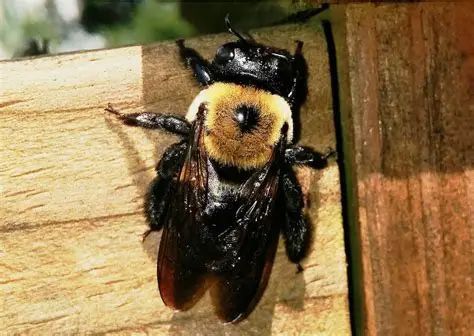
Carpenter bees are large bees often mistaken for bumblebees. Unlike bumblebees, carpenter bees drill perfectly 3/8-inch round holes into wood to create nesting tunnels.
You may find carpenter bees around:
- Decks
- Fences
- Wooden siding
- Eaves
- Outdoor furniture
While carpenter bees are not usually aggressive, repeated nesting can eventually cause damage to wood surfaces around the home.
Signs of carpenter bees include:
- Round holes in wood
- Sawdust beneath wooden structures
- Hovering bees near decks and rooflines
Mud Daubers
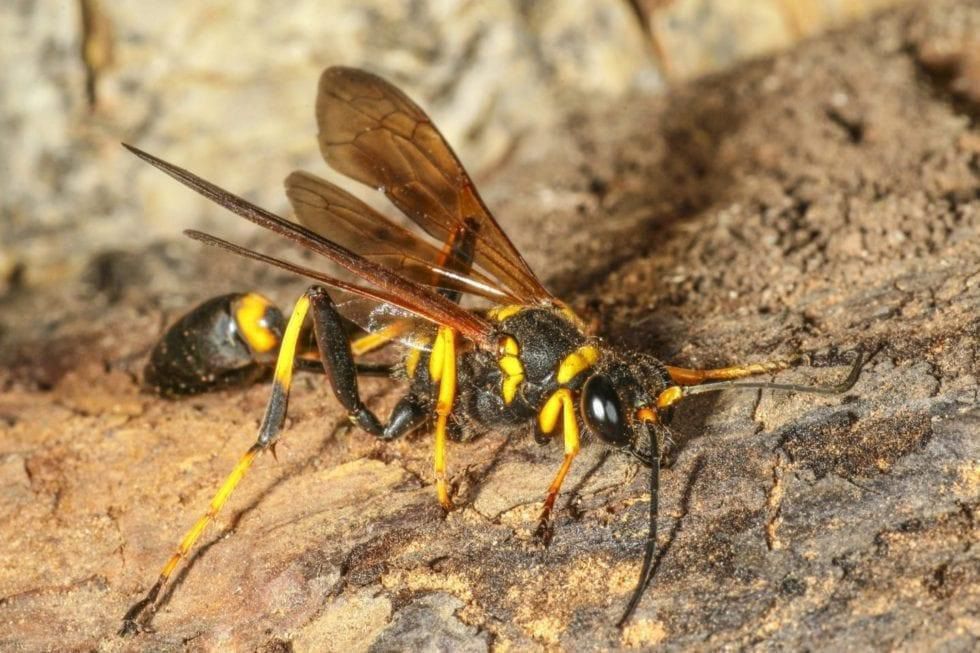
Mud daubers are thin, long-bodied wasps that build mud tube nests on structures.
These nests are commonly found:
- Under eaves
- Inside garages
- On sheds
- Around barns
- On ceilings and walls
Mud daubers are generally non-aggressive and rarely sting unless directly handled. In many cases, homeowners simply dislike the appearance of the nests.
Yellow Jackets
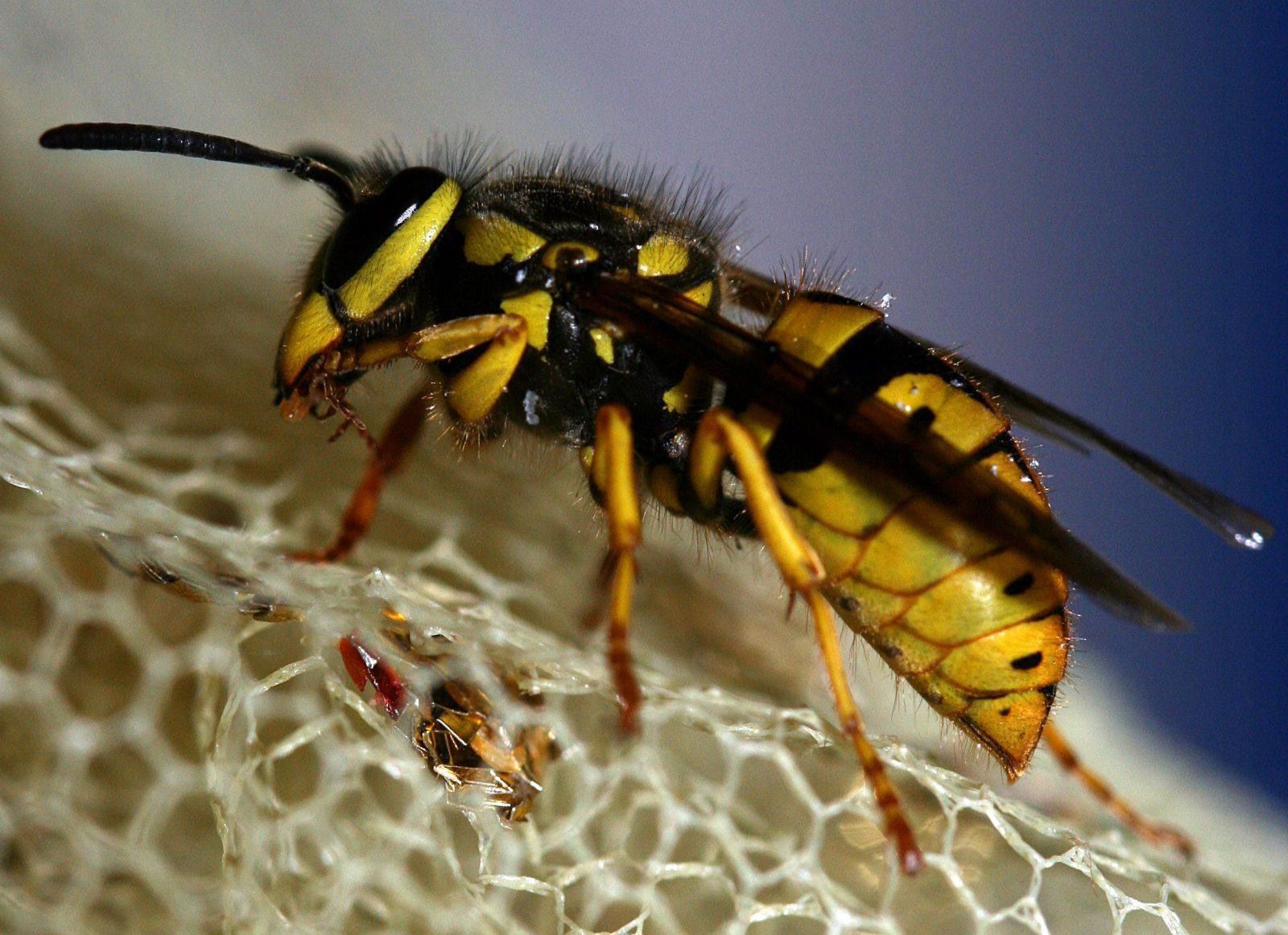
Yellow jackets are one of the most aggressive stinging insects we deal with in Michigan.
They often build nests:
- Underground
- Inside wall voids
- Under porches
- Around landscaping
Yellow jackets become especially aggressive later in the summer and are known for stinging multiple times.
Common signs include:
- Increased wasp activity near the ground
- Wasps entering small holes
- Aggressive behavior around food and garbage
Because of their aggression, yellow jacket nests should be handled carefully.
Hornets
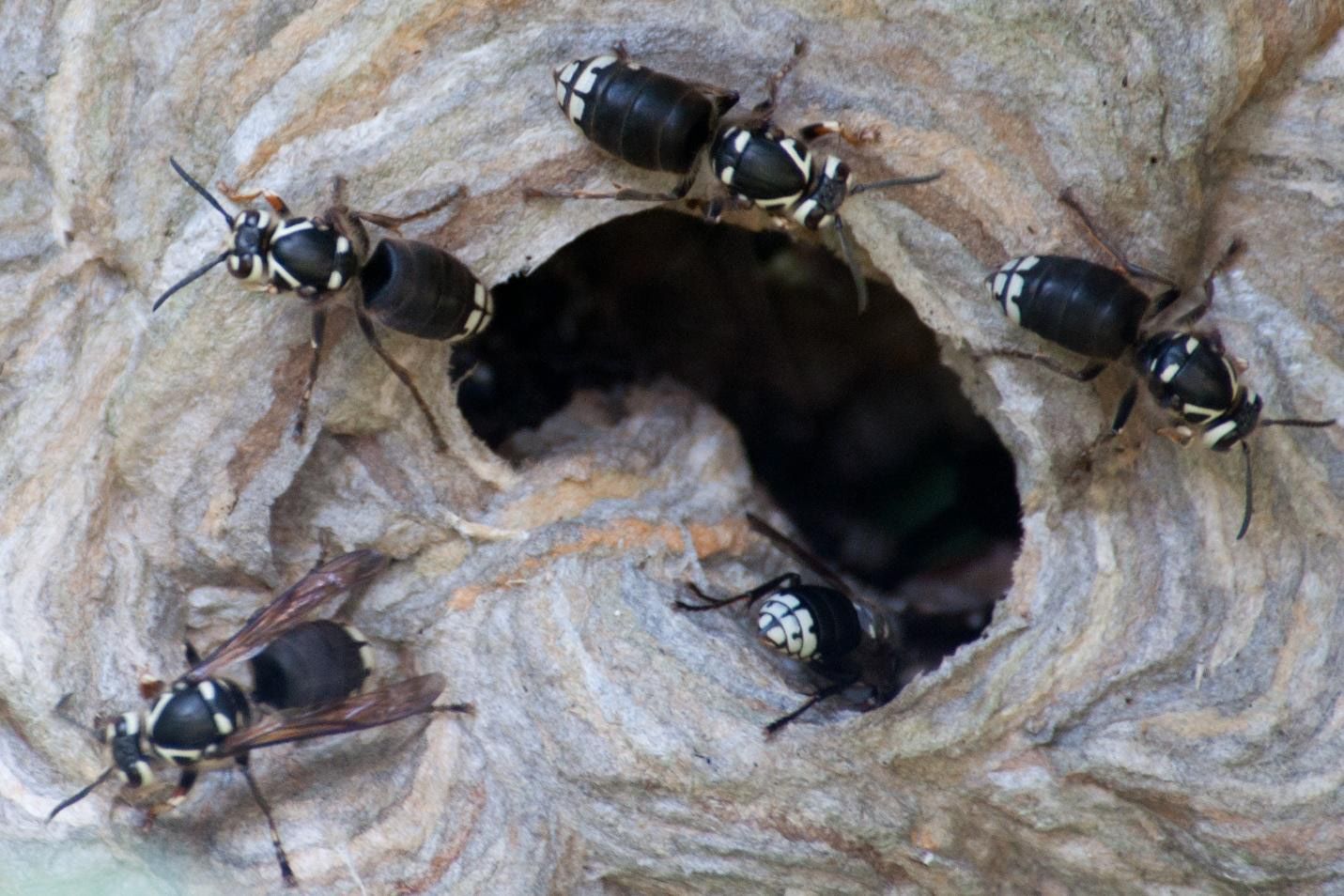
Hornets are large stinging insects that build paper-like nests in trees, bushes, sheds, and rooflines.
Hornet nests can grow surprisingly large during the summer months and may contain hundreds of insects.
Hornets may become aggressive if their nest is disturbed, especially near:
- Front doors
- Play areas
- Patios
- Walkways
Professional removal is often the safest option for active hornet nests around the home.
Honey Bees
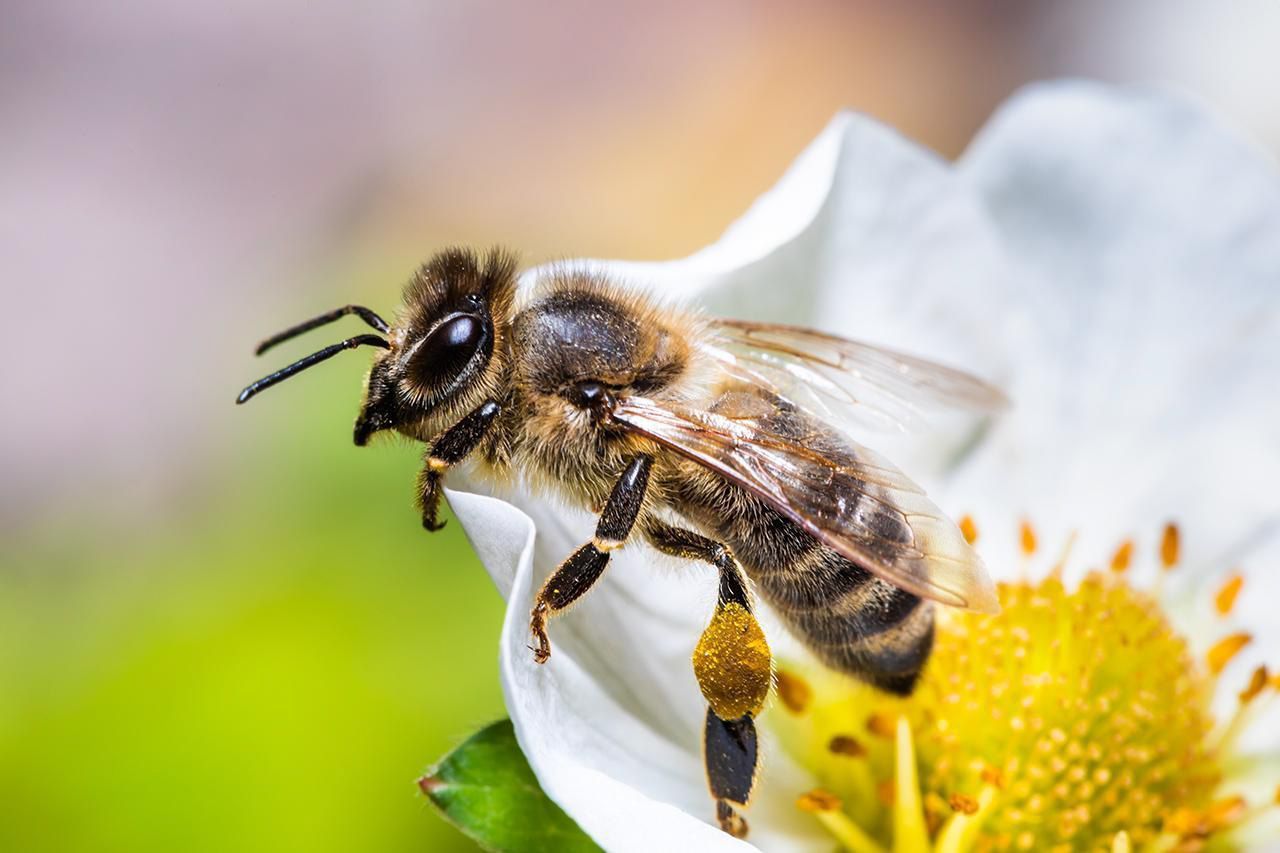
Honey bees are extremely important pollinators and play a major role in our environment and food supply.
Unlike many other stinging insects, honey bees are generally not aggressive unless their hive is threatened.
At Brent’s Bugs, we do not treat or exterminate honey bees. Whenever possible, we encourage homeowners to protect honey bees and consider relocation options through local beekeepers when necessary.
Honey bees are beneficial insects and should be preserved whenever safely possible.
When Should You Call a Professional?
Not every stinging insect requires treatment, but certain situations can become dangerous, especially around children, pets, or high-traffic areas.
You should consider professional help if:
- You notice aggressive behavior
- A nest is near entrances or patios
- You have family members with sting allergies
- Insect activity is rapidly increasing
- You cannot safely identify the species
At Brent’s Bugs, we help homeowners identify stinging insects and provide safe, effective treatment solutions for problem species around Michigan homes.
Final Thoughts
Not all bees and wasps are the same. Some species are beneficial pollinators, while others can become aggressive and dangerous around residential properties.
Correct identification is one of the most important steps in deciding whether treatment is necessary.
If you’re dealing with stinging insects around your home, Brent’s Bugs can help identify the problem and recommend the safest solution for your property.
Call Brent’s Bugs today at (517) 740-2158 or visit www.brentsbugs.com for professional pest control services in Michigan.